A humid summer weekend in ancient Chang’an
Back in late July, a few of my coworkers and I made an impromptu visit to the city of Xi’an in northwest China’s Shaanxi province, the former ancient capital of China, and at various points the largest city in the world.

From Chengdu to Xi’an is a bit under 400 miles, or roughly the distance between Indianapolis and Green Bay, Wisconsin. On the train, it takes about 4 hours. We left right after work on Friday and returned Sunday evening.

Xi’an North Railway station.
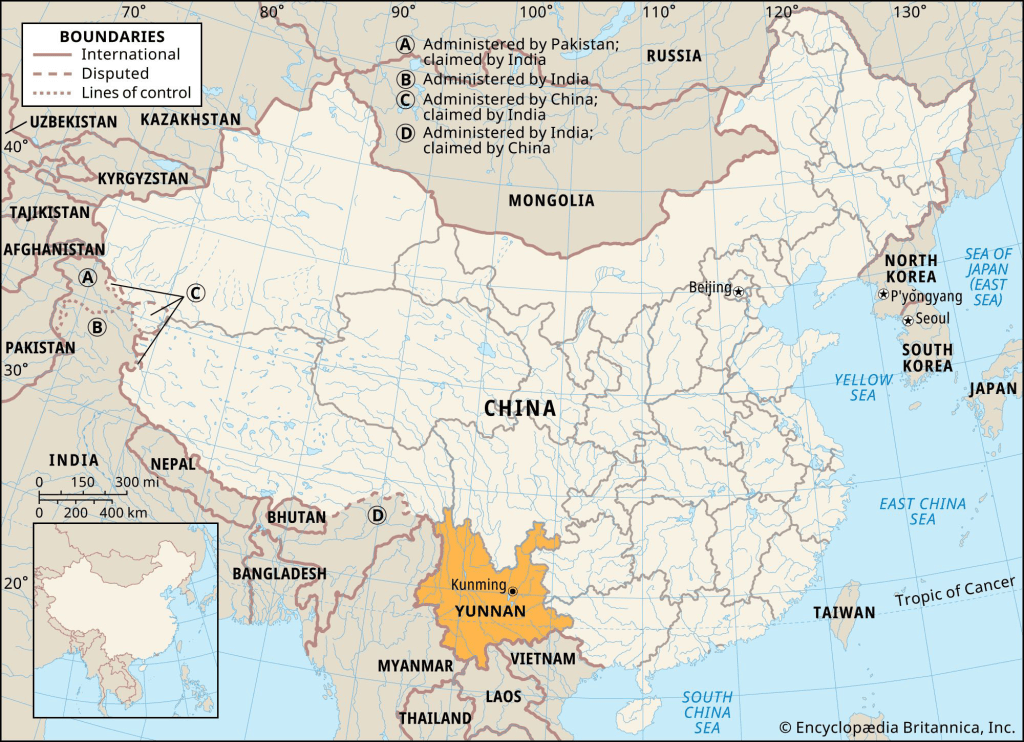
Along with its historical importance, Xi’an also has the distinct pleasure of being one of the hottest, if not the hottest, cities in all of China. In an inverse of Yunnan’s perpetual springtime weather I mentioned in the May 2025 installment, various topographical factors conspire to make this area an absolute furnace in the peak of summer, despite being far north of Chengdu in terms of latitude. While we were there, temperatures peaked one day at 43C, around 109 degrees Fahrenheit.
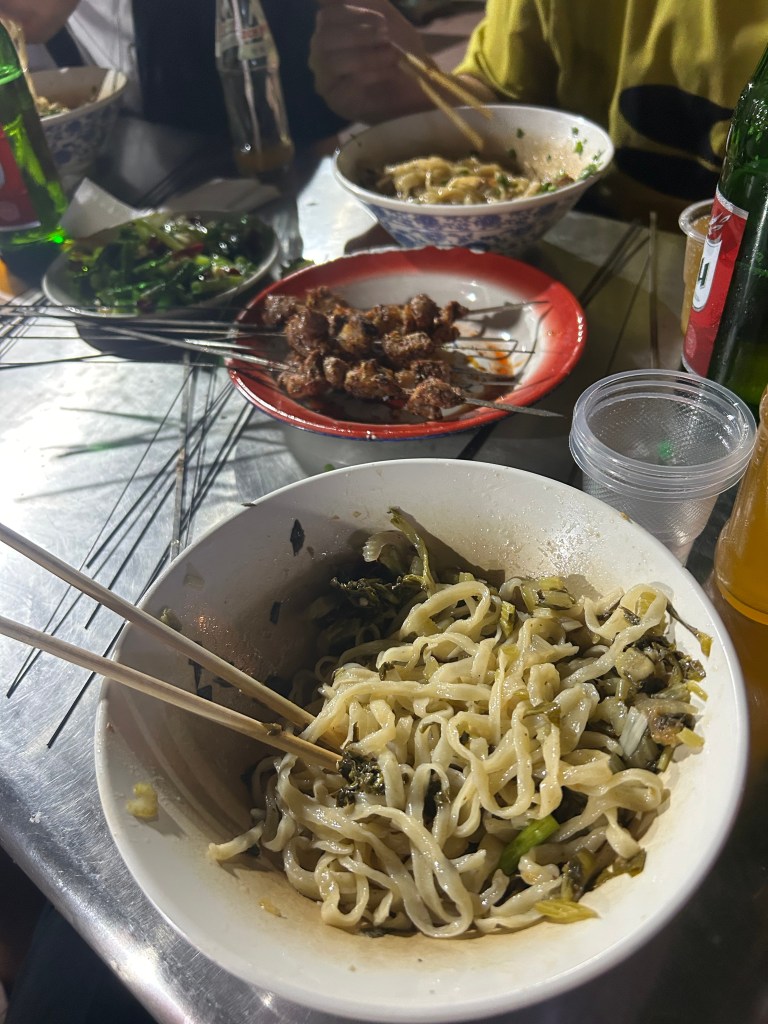
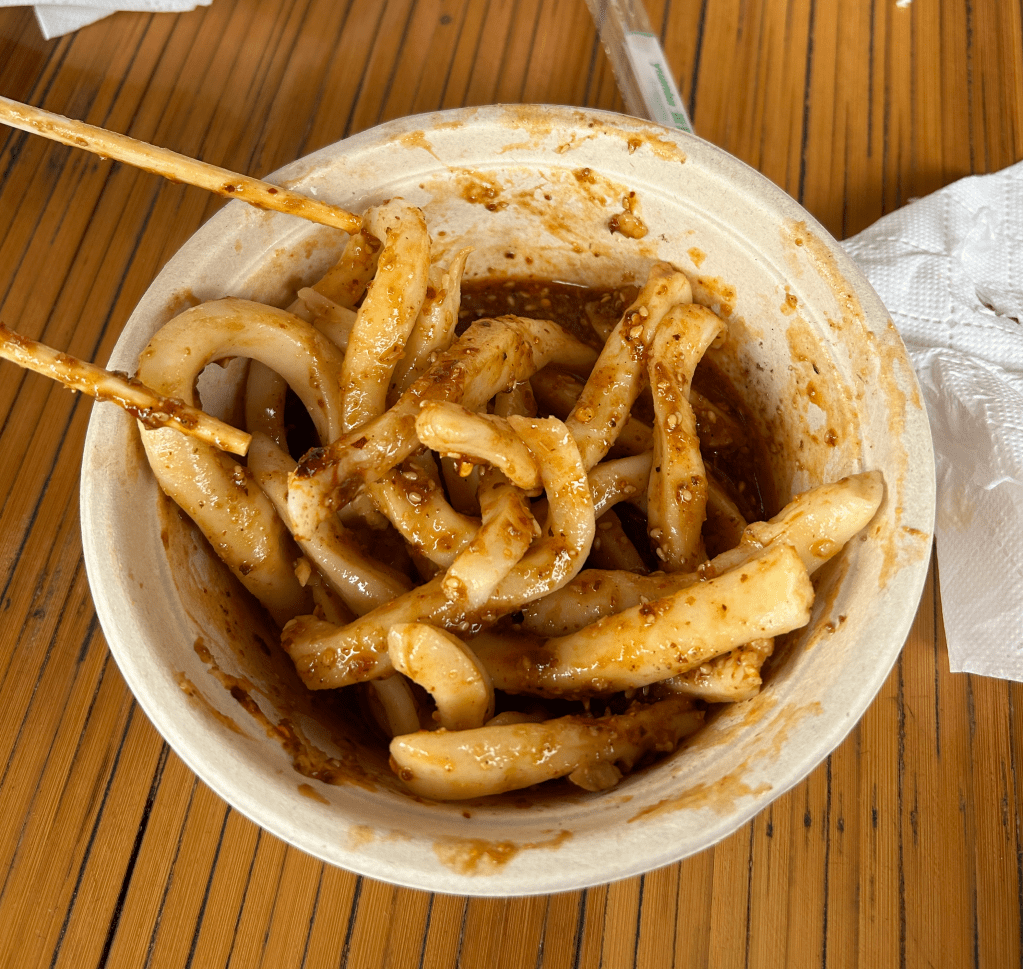
First stop: noodles, barbecue, local orange soda, and some beers. Xi’an is famous for noodles, and they were delicious.
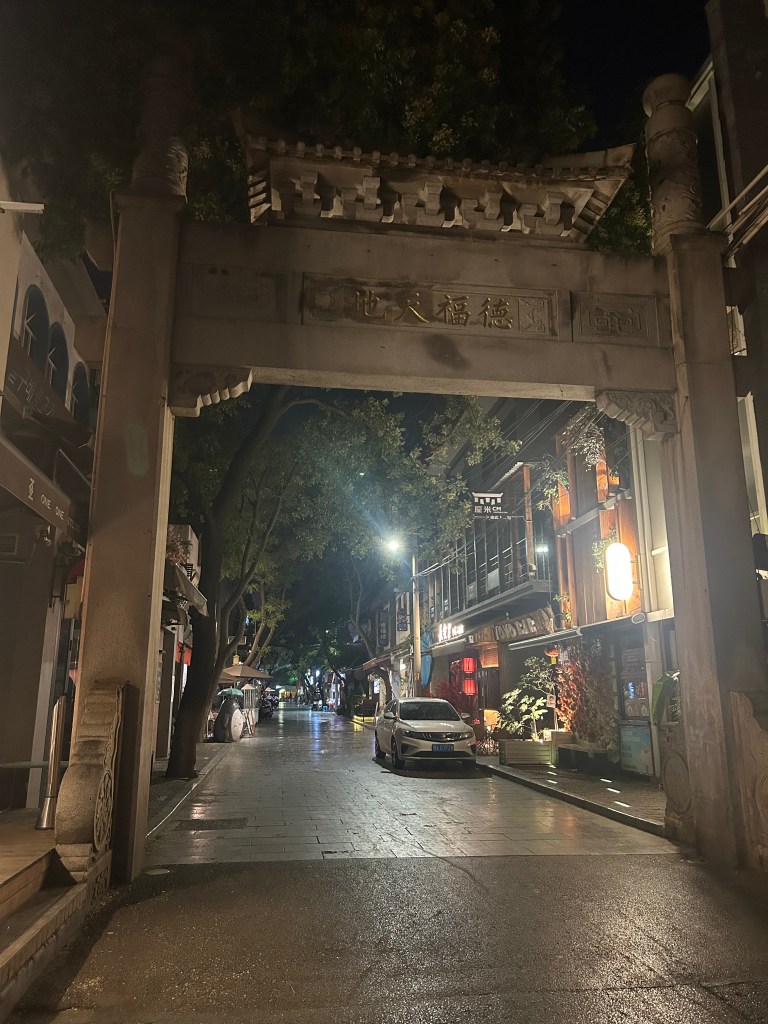
The little street our hotel was on.
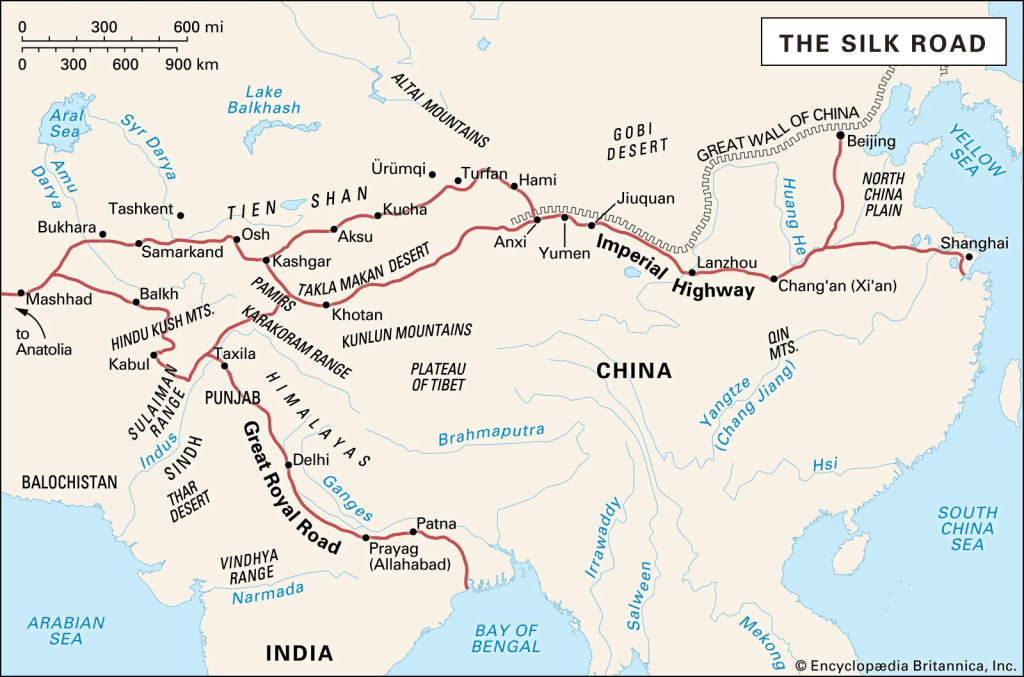
Xi’an is one of the oldest and most significant cities in all of China’s 5,000-year civilization. It has gone by many names and served as the capital of many imperial dynasties. It first came to cultural and political prominence during the ancient Western Zhou dynasty (circa ~1046 BC, over 3,000 years ago) and became one of the key endpoints of the Silk Road. Chinese commodities would come to ancient Xi’an before being carried across the vast deserts of Western China and Central Asia, and ultimately reaching the Middle East and Europe to be sold.
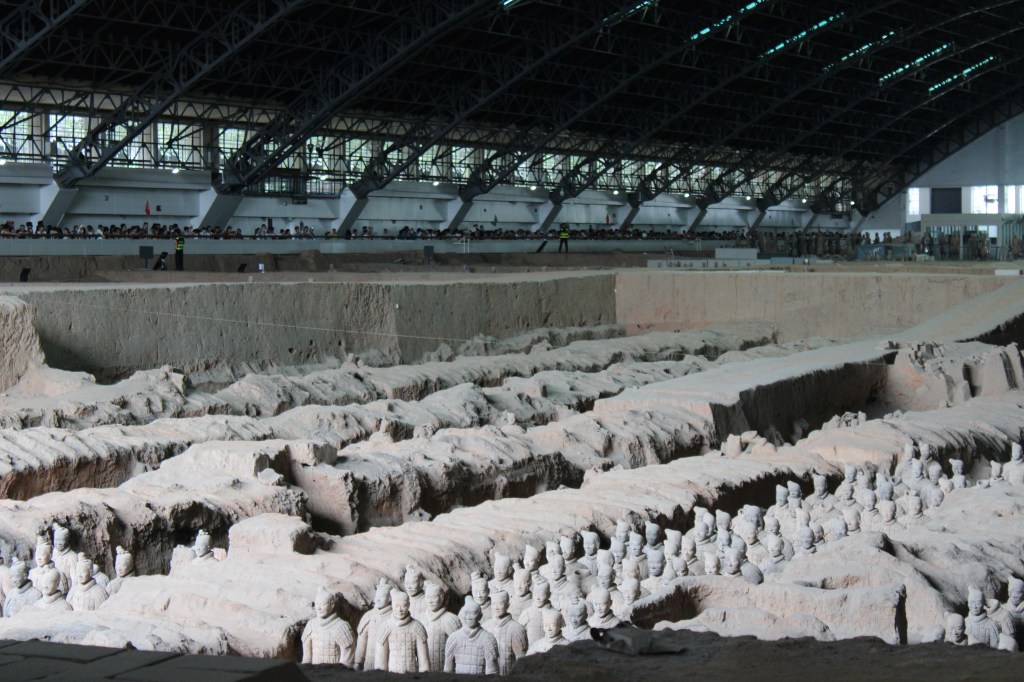
However, outside China, Xi’an is probably best known for being the location of the army of terra-cotta warriors.
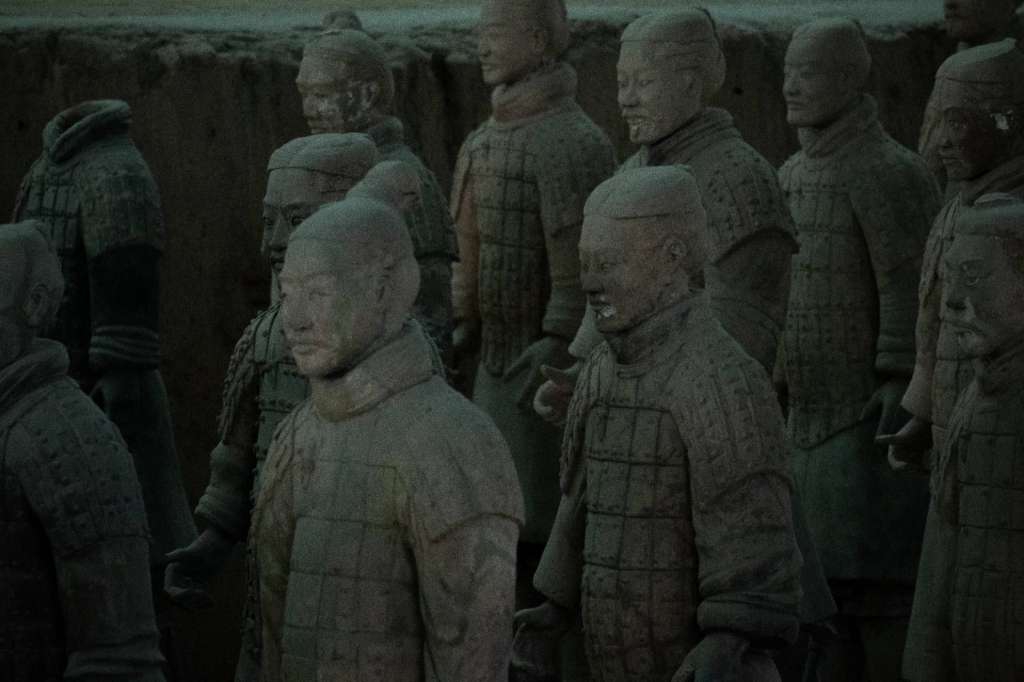
Forgive the history lecture, but I think it’s important to understand the context and relevance to Chinese culture, and I’ve gotten some feedback from people that they enjoy the explanations of topics that aren’t as widely known or remembered in the West. Don’t worry, I’m just giving you the broad strokes.
I mentioned the Zhou dynasty earlier, which ruled for almost 800 years, from 1046 BC – 256 BC. Despite being the dominant regional power during this period, the Zhou was centered in the North and didn’t actually control all of what we now consider to be China. In the final centuries of its existence, the Zhou dynasty entered a sustained decline characterized by internal conflict and the transfer of political power from the central Zhou kings to regional warlords.
By the end, these warlords started to rebel and style themselves as independent kings (王, wang pronounced ‘wong’, meaning ‘king’, is the most common surname in China). Thus, the final centuries of the Zhou dynasty came to be known as the “Warring States period”.

The Warring States was a chaotic era of civil war in China. One of the 4 “classics” of Chinese literature, The Romance of the Three Kingdoms, is a fictionalized version of the real events of this time.
I’ll spare you the military details: when it was all said and done, the kingdom of Qin from the rugged northwest edge of Chinese civilization emerged victorious. One by one, the Qin conquered each of the other contending kingdoms using new and unconventional strategies, logistics, and military technology.
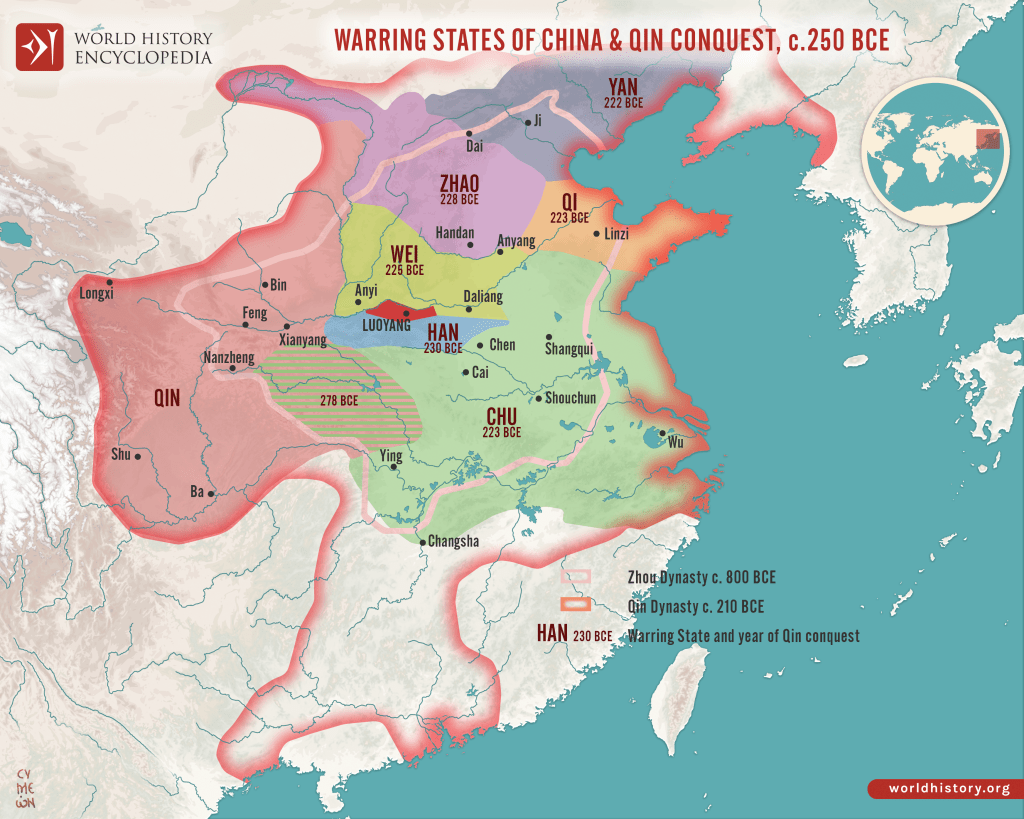
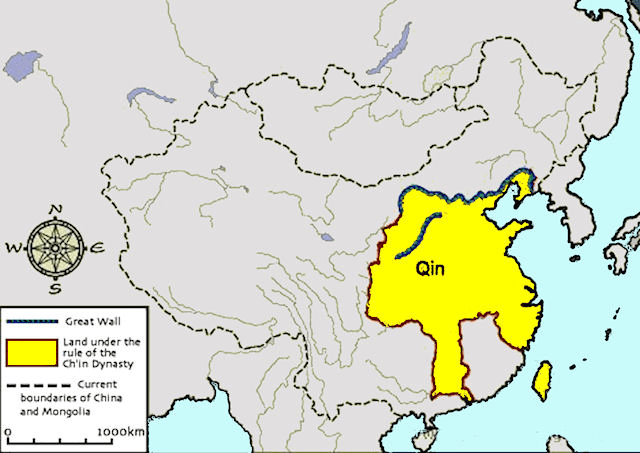
For the very first time, China was entirely unified under the control of a single dynasty. In 221 BC, the king of Qin (Qin, pronounced ‘chin’, is the origin of the name ‘China’) abandoned the title of ‘king’ (王) and assumed a new title: Emperor (皇帝, huang di). Qin Shi Huang, as he is commonly called, was the first emperor of China and he is responsible for the standardization of currency, weights and measures, road dimensions, and even the Chinese writing system itself. He had an immeasurable impact on Chinese civilization that endures to this day, which is why, in spite of his notorious brutality (we’ll get to that later), he is still admired, or at least respected.
All of that is to say, the world-famous terra-cotta army (that was only discovered in the 1970s by peasant farmers that were trying to dig a well) was originally built to “guard” the secret burial site of this very same Qin Shi Huang, the first emperor. Today, the warriors are located about a 40-minute drive outside of the city center of Xi’an.
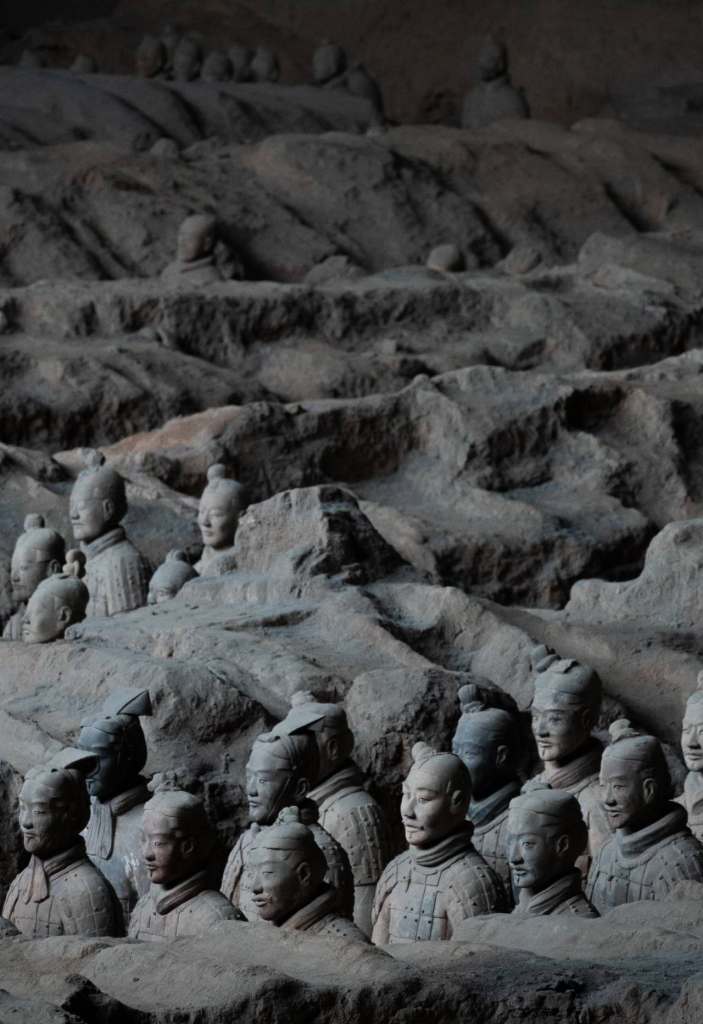
One of my friends on the trip has a much better camera lens than me so I’ll be stealing some of his photos.

Who says America doesn’t have culture?

The biggest collection of warriors is in this building that looks like an airplane hangar. It’s really breathtaking how many of them there are, and how well preserved after 22 centuries.

We got there at ~10AM on a Saturday which is probably about the worst time you could go in regard to crowds.

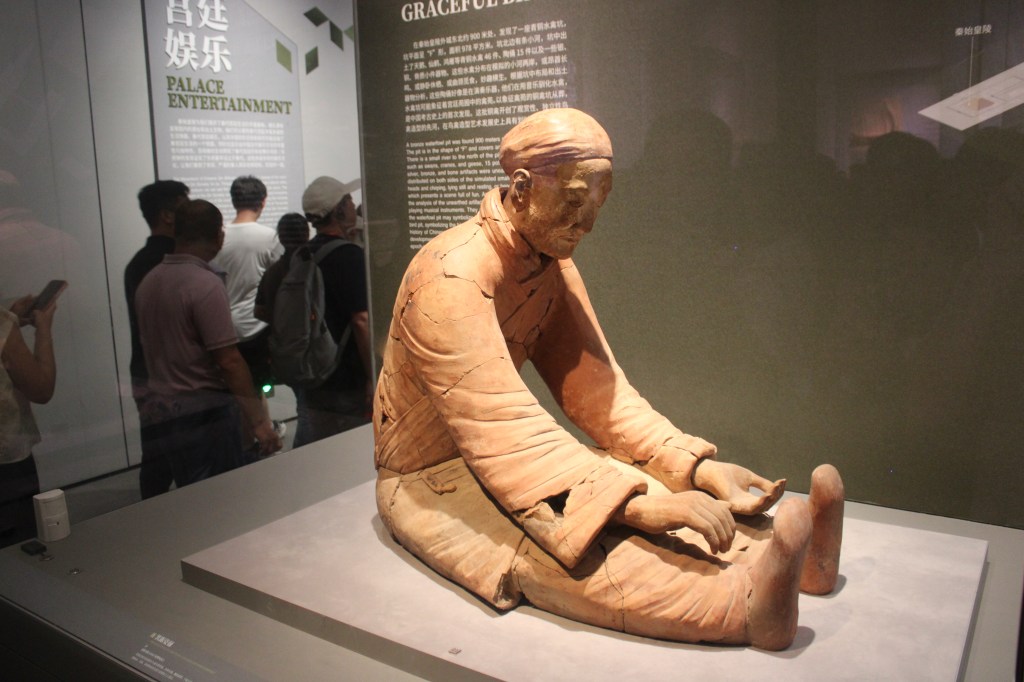
Up close, the figures are incredibly detailed. From facial features, hair, clothes, weapons, and accessories, no two figures (out of 8,000) are exactly alike. The terra-cotta army includes infantry soldiers, cavalry (including horses), chariots and charioteers, archers, women, officers, generals, dancers, and even animals like swans and cranes. Originally they were all painted bright colors, but after exposure to the dry air, the paint fades and flakes off in a matter of minutes.
The realism and lack of repetition in the statues has led some scholars to theorize that the warriors were each modeled off of actual soldiers in Qin Shi Huang’s army.
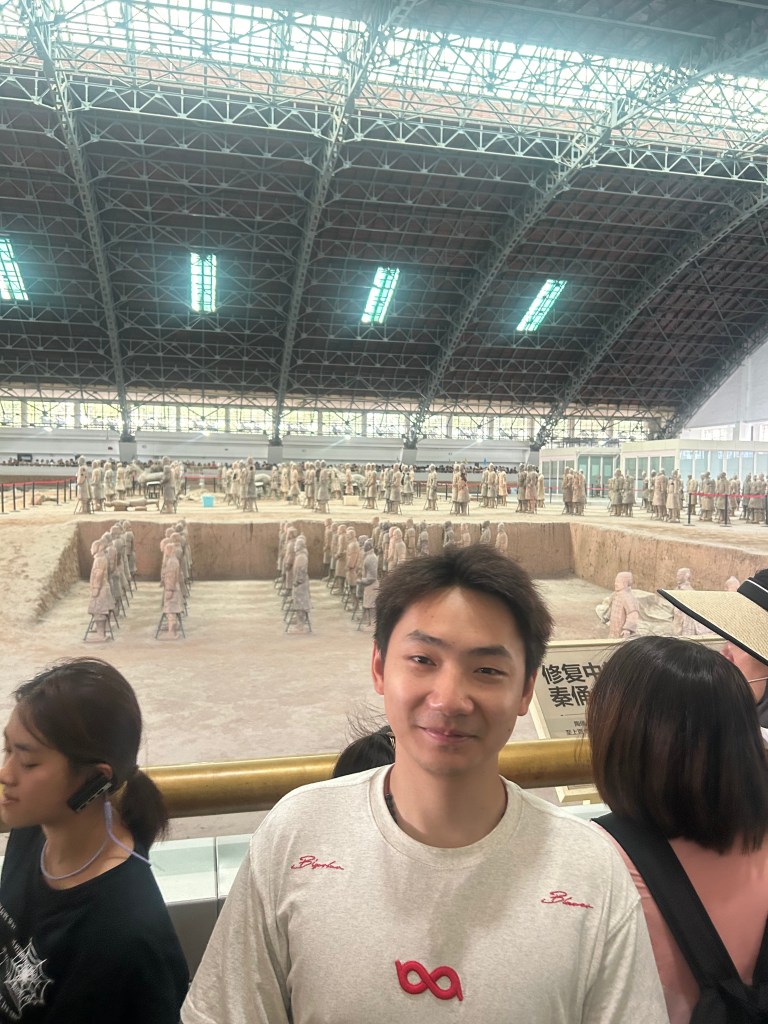
My friend Jia-Le also came along. He’s lived in Sichuan all his life but never had the opportunity to go see the warriors for himself. I’ve found that Chinese people have a genuine and living connection to their history, and care deeply about what is often referred to as intangible cultural heritage. It was a very happy moment for him.

The army is actually a few kilometers away from the mausoleum of the first Emperor. The emperor’s pyramid-shaped tomb is massive: the outer walls measure about 0.6 miles by 1.2 miles, and the complex was built 400 feet high before being covered with grass and trees to make it appear like a natural hill. It is believed to contain many chambers and an inner gate, with more statues, artifacts, booby traps, replica buildings, and underground streams. The mausoleum is almost entirely un-excavated, for a few reasons.
The first, more intuitive reason is that the archaeologists are concerned that with current technology, excavation (i.e. potential exposure to air, light, moisture) could permanently damage or destroy the priceless artifacts within.
The second reason is pretty remarkable. Qin Shi Huang is notorious in Chinese history for, during and after his successful military campaigns and conquest, obsessively attempting to prolong his own life and ultimately achieve immortality. I guess once you hit 40 and you’ve taken over the entirety of what you consider to be “the world”, (天下, tianxia, literally “everything under Heaven”) there’s not much to aspire to short of living forever.
So the first Emperor ingested many fraudulent elixirs, sought out wise sages and alchemists, and even sent a ship captain to sail into the East China Sea towards Japan with hundreds of young men and women to find a mythical 1,000-year old magician that was said to possess the secret to eternal life (they never returned) (also, Chinese tradition holds that after being deceived by a couple of alchemists in this immortality quest, the emperor summoned 460 scholars to the capital and had them all buried alive).
All of that is to say: Qin Shi Huang unexpectedly died at age 49. The exact cause is unknown, but it is commonly believed that he died of mercury poisoning, as he was consuming lots of liquid mercury in his final years as one of his immortality elixirs. Accordingly, it was arranged that his mausoleum would also be chock-full of mercury. The traditional accounts of the tomb’s construction include huge “rivers” and “oceans”, mimicking real bodies of water in ancient China, entirely composed of liquid mercury. This may seem outlandish, but scientists have actually observed high mercury contents in the soil near the burial site, which makes the prospect of excavation even more complicated, given that the tomb could be filled with poisonous fumes.

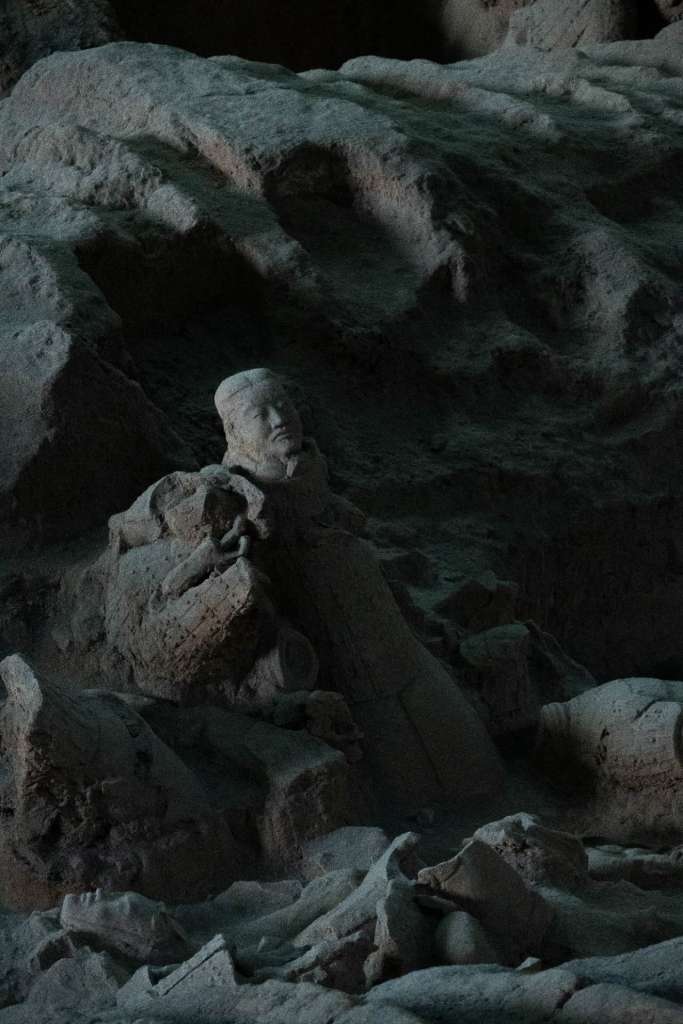
If you’ve made it through all of that heavily-simplified (I am not qualified for any higher level) Chinese history lesson, I extend my congratulations and give you an A+ for this semester.
I’ll wrap up the terra-cotta warriors with this: it’s very difficult to definitively confirm or tabulate exact numbers, but historical accounts and archaeological remains leave open-ended the plausibility of the following, chilling traditional story about the completion of the tomb. It is believed that when the emperor died, the workers that completed the final sections of the complex and their entire families, the emperor’s former concubines, courtiers, servants, and anyone who knew the mausoleum’s location, potentially tens of thousands of people, were all sealed inside with the emperor’s body and buried alive.
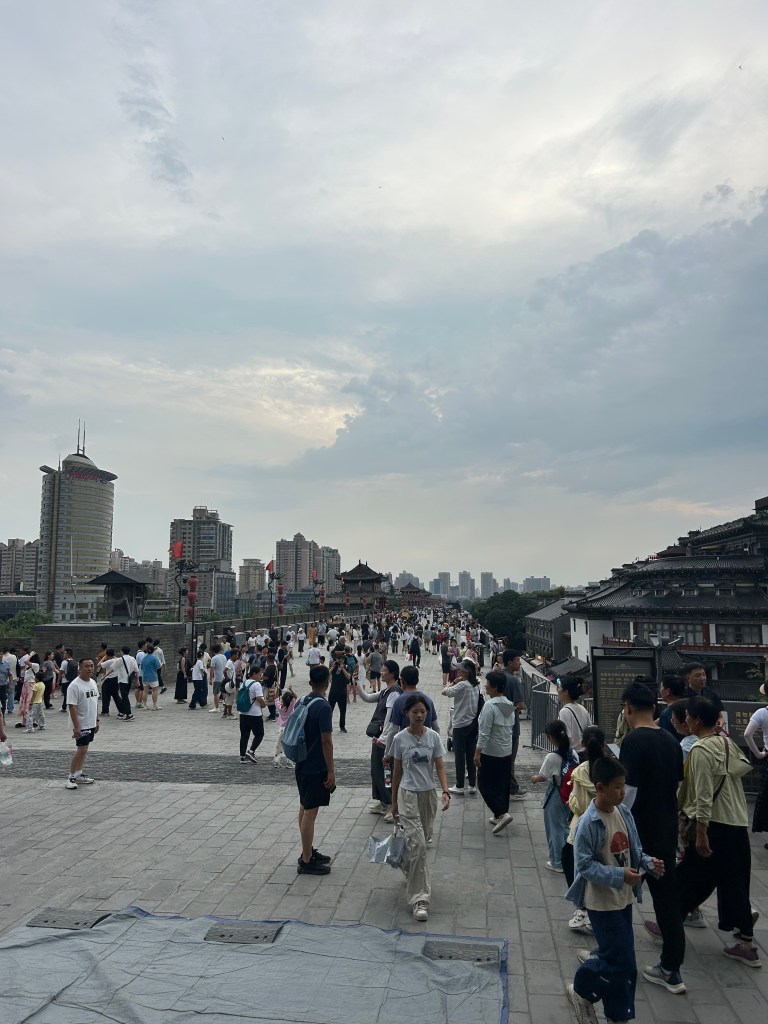
Back in the modern Xi’an, or rather, in the old part of the new city. Xi’an has a really cool city wall dating from the Ming dynasty (~1300s AD) that you can walk on top of, all the way around in a big square.

You can also rent bikes on top of the wall and ride them around.
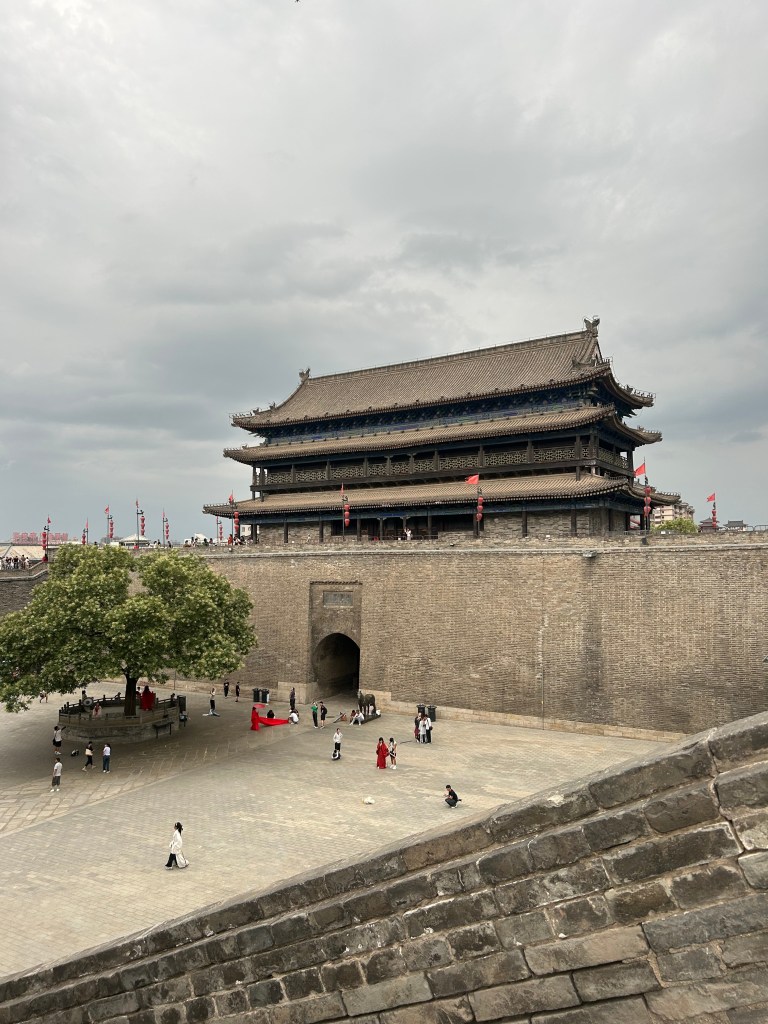
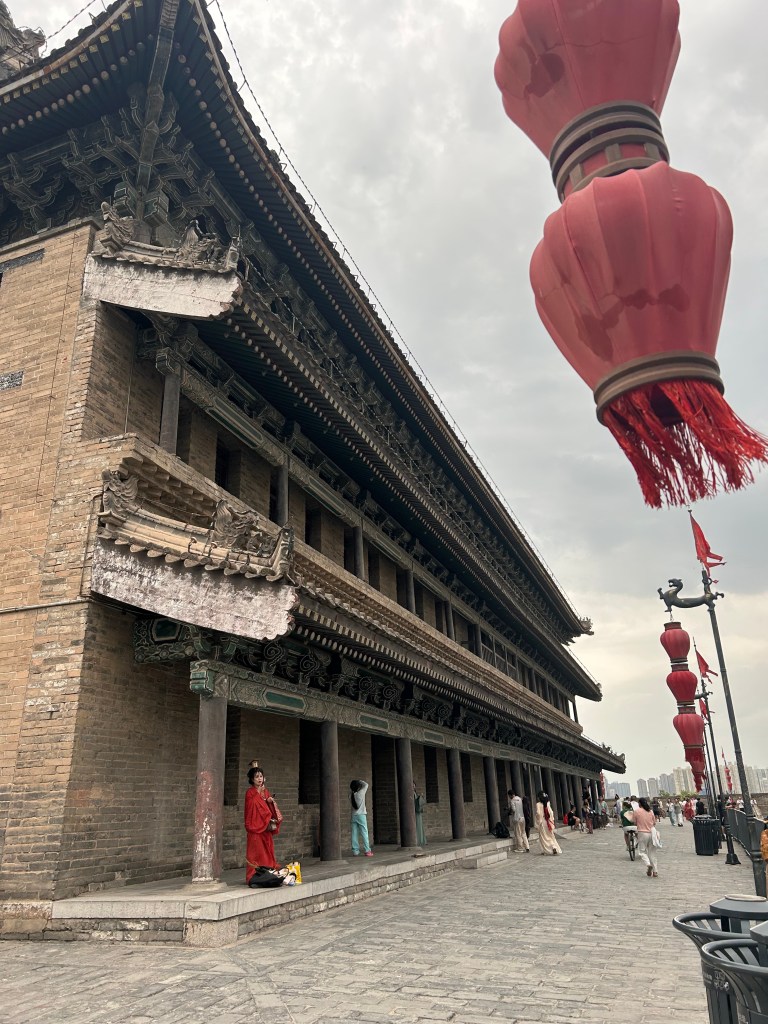
I’ve mentioned before that people in China love to rent traditional costumes and do photo shoots. This location is tough to beat.
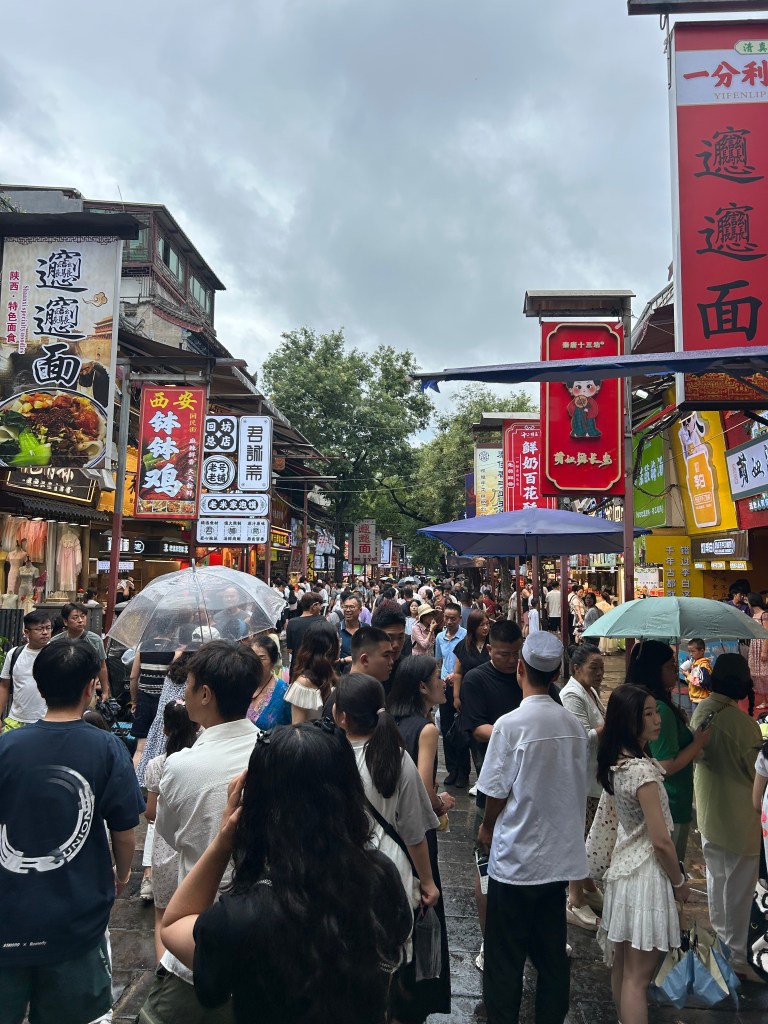
The popular Muslim Quarter of the old city, near our hotel. Men of the Chinese Muslim “Hui” ethnic group traditionally wear hats like the one you see worn by the man in white in the foreground.

Yangrou paomo (lamb broth with unleavened bread) from a Hui restaurant. The perfect food to eat if you have a cold.

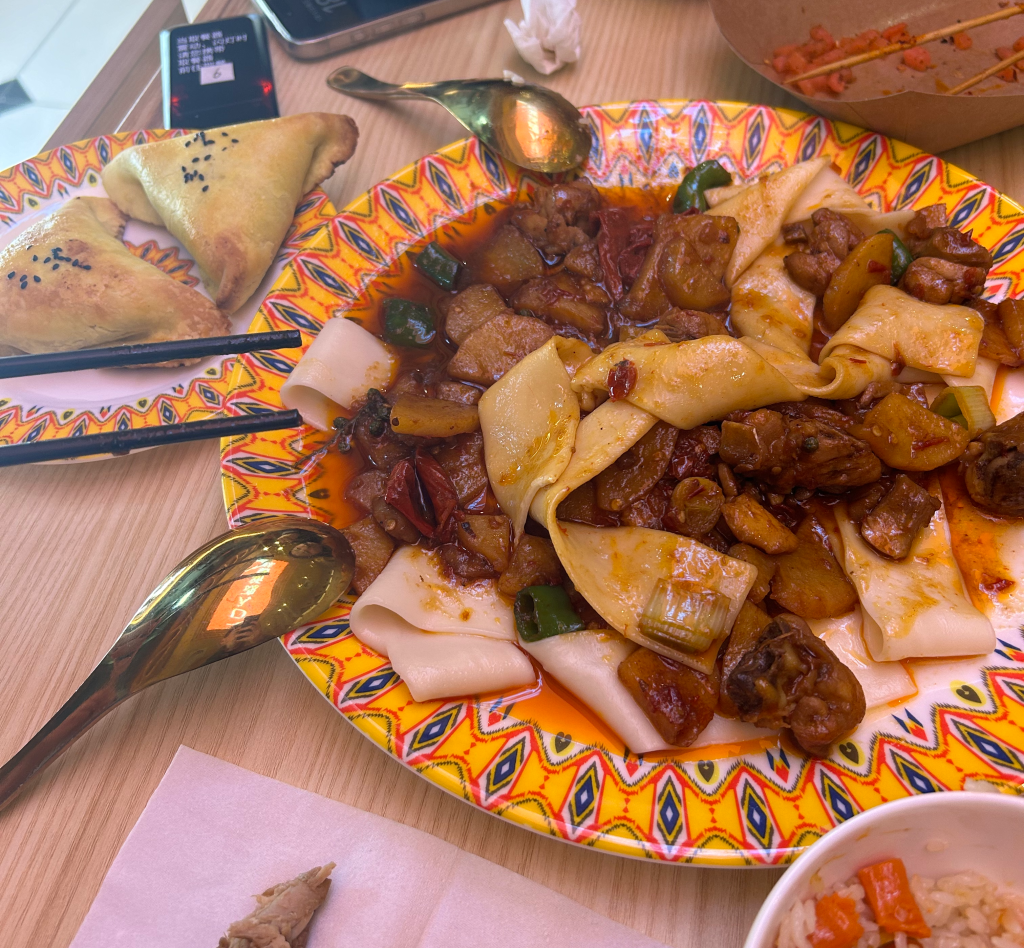
Shaanxi province’s famous Biang Biang noodles. Very wide, with beef, chili oil, carrots, garlic, and various other spices.

One of Xi’an’s many monuments to ancient Chinese poets. I believe this poet is from the Tang dynasty (618-907). The Tang imperial capital was at Xi’an (then called Chang’an) and so all of the famous poets lived in the city at one time or another. The Tang dynasty is seen as a golden age in China, particularly for art and poetry. Tang poems are still taught in every kindergarten and primary school in China (including mine) to help children learn Chinese. The Tang dynasty deserves more coverage than I’m able to provide here.
That’s all I got. I hope it makes sense, and I’m sorry for any mistakes or bad writing.
Best,
Patrick

























































 Pat's Blog